On the small Italian island of Ventotene, a new project is emerging that connects art, environmental awareness, and collective action: Isola Alter Ego. What may initially appear as an artistic intervention is gradually becoming an open platform for rethinking how we live with the sea and how communities can actively shape more sustainable futures.
The initiative is developed collaboratively by La Vica Ventotene, PartArt4OW, Refunc, and Illuseum Berlin. At its core, Isola Alter Ego is not a finished concept, but a shared inquiry — an exploration of the relationship between people, islands, and oceans.
An Island as an “Alter Ego”
The idea behind Isola Alter Ego is both poetic and practical. The island becomes a mirror — an “alter ego” — reflecting the ways we interact with nature, resources, and each other.
The project unfolds on two interconnected levels:
- As an abstract space, it collects stories, memories, drawings, and maps from local citizens and schools, building a shared collective imagination.
- As a physical space, it takes shape through circular architecture made from reclaimed materials, creating visible symbols of collective decision-making and participation.
A major focus of the project is marine plastic pollution. Instead of treating collected waste as something invisible or disposable, the materials gathered locally are transformed by the Dutch collective Refunc into modular structures that host workshops, conversations, and community gatherings.
In this way, waste becomes infrastructure — and infrastructure becomes a catalyst for dialogue.
The First Week on Ventotene
The project’s first week, held from March 10–15, already demonstrated the power of this collaborative approach.
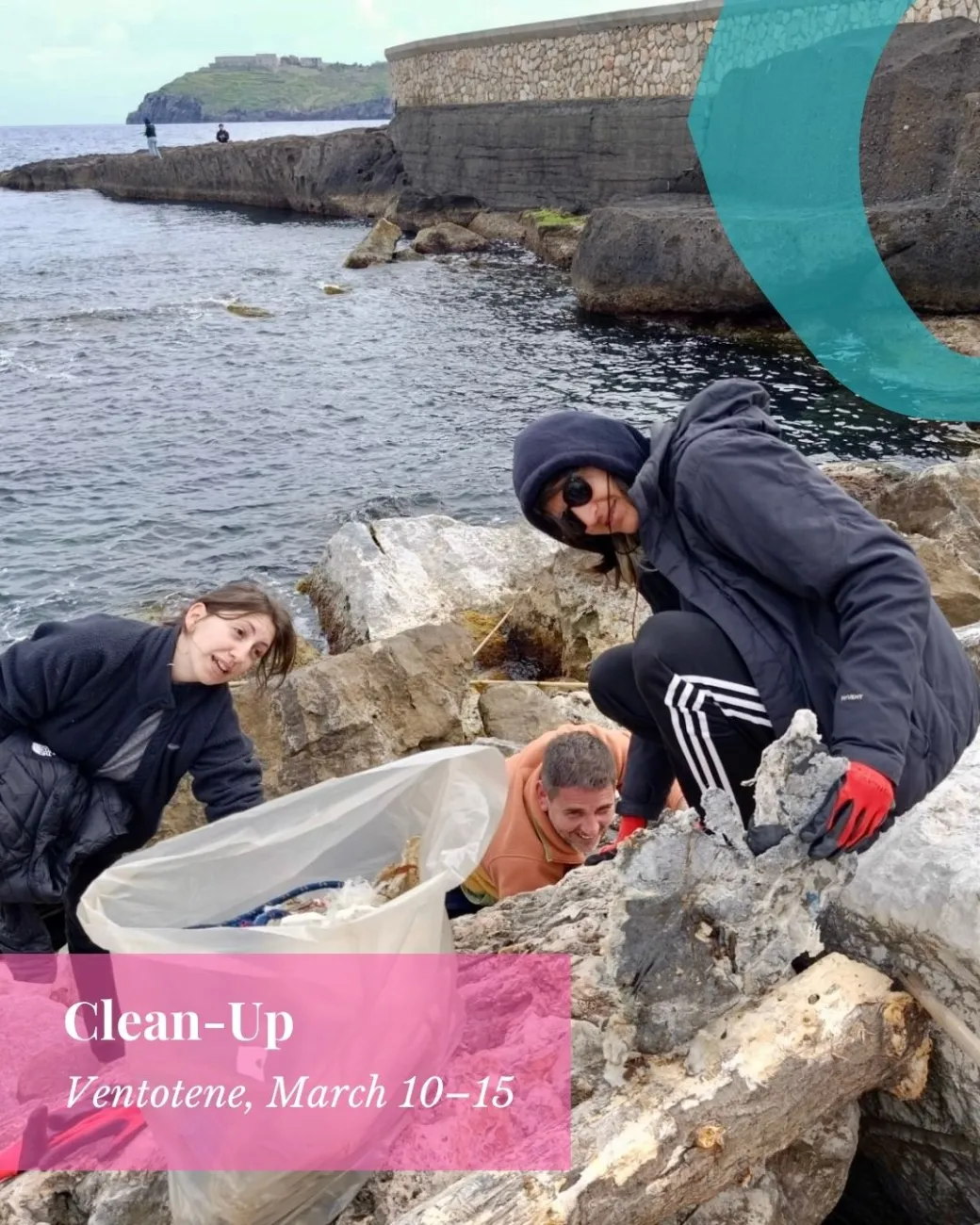
Throughout the week, participants organized multiple clean-ups at the old Roman harbour and along the island’s coastline, collecting large amounts of waste while drawing attention to the environmental realities affecting coastal communities today.
At the same time, several creative and community-driven interventions transformed public spaces across the island:
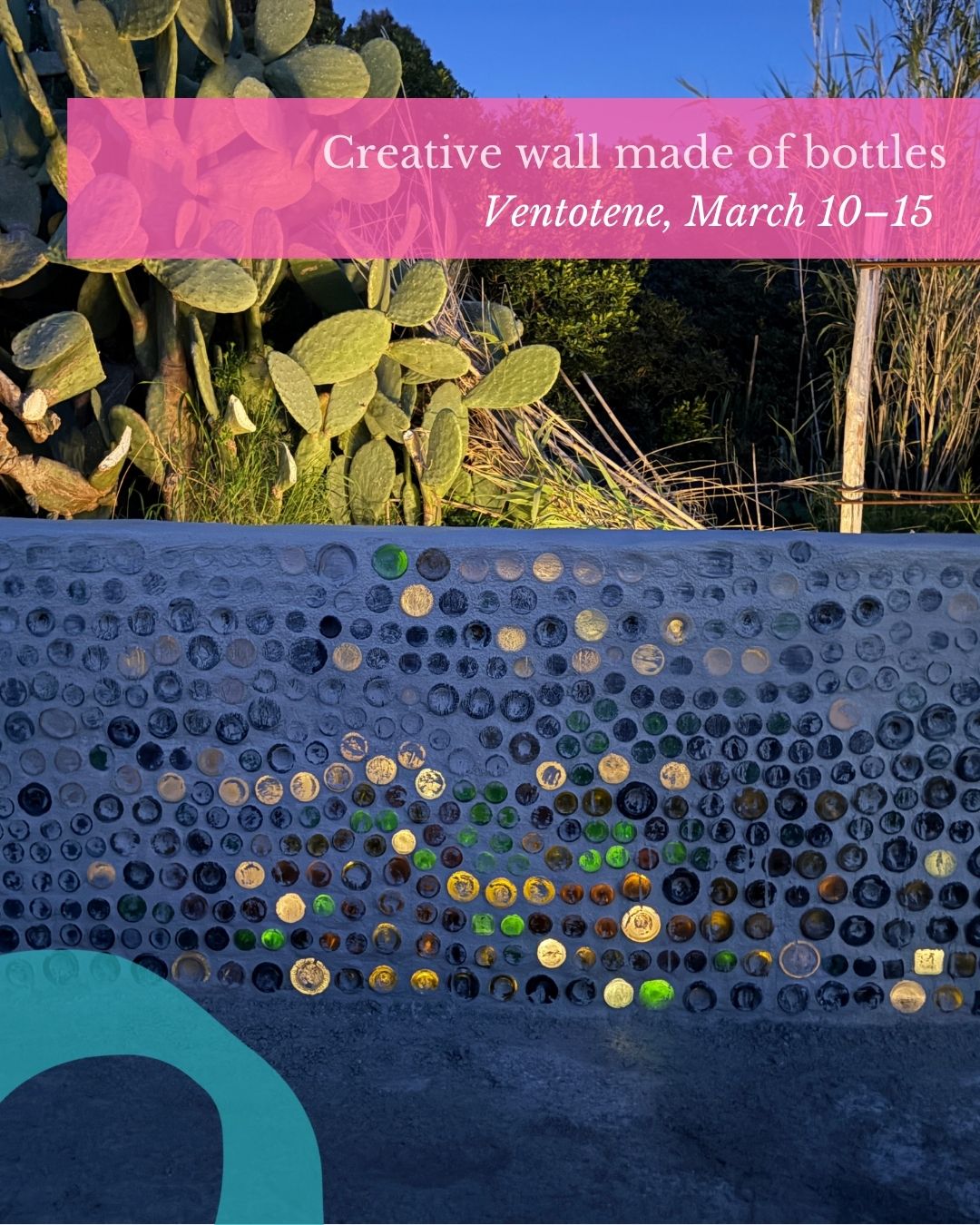
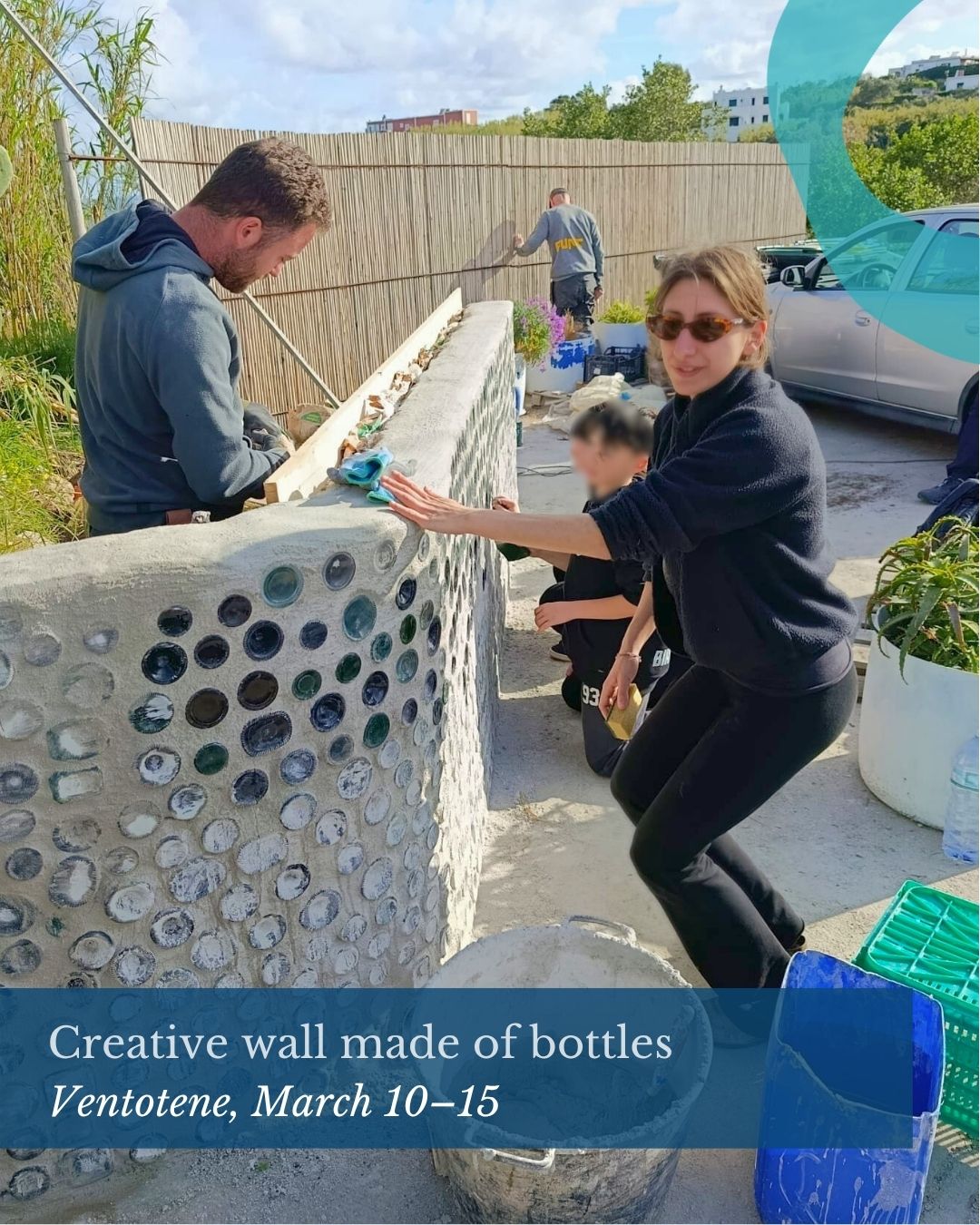
- A wall made from recycled bottles was built to aesthetically conceal trash bins while improving the surrounding environment.
- Harbour planters were cleaned and replanted to bring life and greenery back into neglected spaces.
- Workshops with children combined creativity, environmental education, and collaborative learning.
- A final community event brought together residents, volunteers, and supporters, strengthening local connections and creating new networks around shared environmental action.
The visual documentation of the project captures this spirit beautifully: volunteers collecting fishing nets and plastic debris from rocky shores, children working together in workshops, and translucent bottle walls turning waste into vibrant architectural elements.
Art as a Tool for Transformation
What makes Isola Alter Ego particularly compelling is its understanding of art not as decoration, but as a method for participation and social transformation.
Rather than simply talking about environmental issues, the project creates spaces where people can actively engage with them together. On an island like Ventotene, ecological questions are inseparable from questions of public space, local identity, and community resilience.
The first week marked only the beginning of a much longer process. Isola Alter Ego aims to continue evolving through collective contributions, new encounters, and experimental forms of collaboration between citizens, artists, researchers, and environmental initiatives.
Perhaps this is the true meaning of Isola Alter Ego: not presenting a finished vision of sustainability, but creating the conditions for communities to imagine and build that future together.